
A full calendar during tax season doesn’t guarantee steady growth for your practice. The right marketing strategies for tax professionals connect how clients discover you with follow-up that earns their trust and encourages them to return. When your time and budget are limited, it can be hard to decide which channels deserve your attention and how to keep client relationships active beyond filing season.
Build a more consistent plan by choosing activities that fit your audience, creating a clear path from first inquiry to ongoing communication, and tracking what moves prospects forward. This article shows you how to assess practical channels, strengthen follow-up, and use meaningful signals to refine your approach without relying on promises or vanity metrics. Tools such as GHL for Tax Offices, along with tax software and professional training, can support the business systems behind your marketing. A connected approach helps you make each client interaction useful and build trust throughout the year.
Key Takeaways
- Set a clear practice goal before choosing marketing activities, so your plan supports growth without pulling focus from client work.
- Use plain language to explain who you serve and what clients can expect, without promising tax or refund outcomes.
- Compare marketing strategies for tax professionals by purpose and effort, distinguishing ways to attract prospects from ways to nurture existing relationships.
- Build a repeatable plan by choosing channels, planning messages, assigning tasks, and reviewing results.
- Explore how GHL for Tax Offices can support marketing automation and client acquisition as part of a connected business strategy.
Marketing Strategies for Tax Professionals: Start with Your Practice Goals
You need a steady way to attract clients, while keeping time for accurate, responsive tax work. Marketing supports both priorities when you choose activities deliberately instead of adding channels simply because other practices use them. In practical terms, marketing helps suitable clients discover your practice, understand how it fits their needs, and decide whether to work with you or return.
Before investing time or budget, decide what you want your marketing to accomplish. Are you looking for more qualified inquiries, more completed consultations, stronger referrals, or more returning clients? A clear goal gives you a standard for choosing among marketing approaches and deciding what deserves your attention.
Which clients and services should your tax practice prioritize?
Start with the clients your practice can serve well, such as individuals, small businesses, or returning clients. Connect each group to services you actually provide. If you prepare individual returns, make that service easy for individuals to understand. If you serve small businesses, explain the business-related tax services you offer without implying support beyond your scope.
Use clients’ questions to sharpen your message. Notice what people ask before booking, what they need to get started, and which parts of your service they find confusing. Turn those patterns into straightforward explanations. If you offer bilingual service, make your communications accessible to the English- and Spanish-speaking clients you serve.
Consider your capacity and preferred working style, too. If your practice relies on appointments, explain how prospects can request one. If your team has limited availability, focus on inquiries that match your services and workflow. Choose priorities you can support without compromising the responsiveness your clients expect.
How can you set a useful marketing objective?
Choose one specific objective before adding a channel or campaign task. First, record a baseline, such as the number of inquiries, consultations, or returning-client engagements you see over a defined period. You’ll then have a point of comparison when you review whether your marketing activity is moving the practice toward its goal.
A useful marketing objective describes a measurable practice outcome, not attention for its own sake. For example, you might aim to increase completed consultations from qualified inquiries during a campaign. Use your current activity as the starting point and set a target that fits your capacity. Page views or social engagement can provide context, but they matter most when they connect to a meaningful next step.
Keep the objective realistic for your audience, services, and team. If you have limited time to respond, a surge in inquiries may create strain rather than growth. Set a target you can serve, track the activity directly related to it, and adjust your approach based on your results. That gives your marketing strategies for tax professionals a practical foundation for the decisions ahead.
Build a Tax Practice Marketing Message That Earns Trust
Prospective clients need to understand what you do and whether your practice fits their needs. A marketing message is a concise explanation of who you help and how you serve them. Clear language makes it easier for people to take the next step and helps set expectations before a conversation begins.
Use the same core message across your website, directory listings, email, and social profiles. Consistency helps people recognize your practice and compare what you say with the experience you provide. Keep every claim grounded in real services and support. Avoid superlatives or promises about tax results. Credibility comes from accurate details, not big claims.
How do you communicate your tax practice’s value clearly?
Describe the clients you serve, the services you provide, and the practical support you can substantiate. Replace phrases like “we handle everything” with details that explain what you offer, how a prospective client can begin, and how your team communicates along the way. Give prospects a clear next step, such as requesting an appointment or learning what information to prepare for an initial conversation.
For example, “We help individuals prepare their tax returns and explain the next steps in clear language” tells readers more than “personalized, world-class service.” Adapt the wording to your actual services and workflow. Explain what clients can expect in terms they can understand, and keep those descriptions consistent wherever prospects encounter your practice.
How can educational content support client trust?
Useful educational content answers questions people already ask. Note recurring topics and seasonal information needs, then turn them into short website articles, email explanations, or social posts. Keep each piece focused on one question, use plain language, and clarify when information is general rather than guidance for someone’s individual situation.
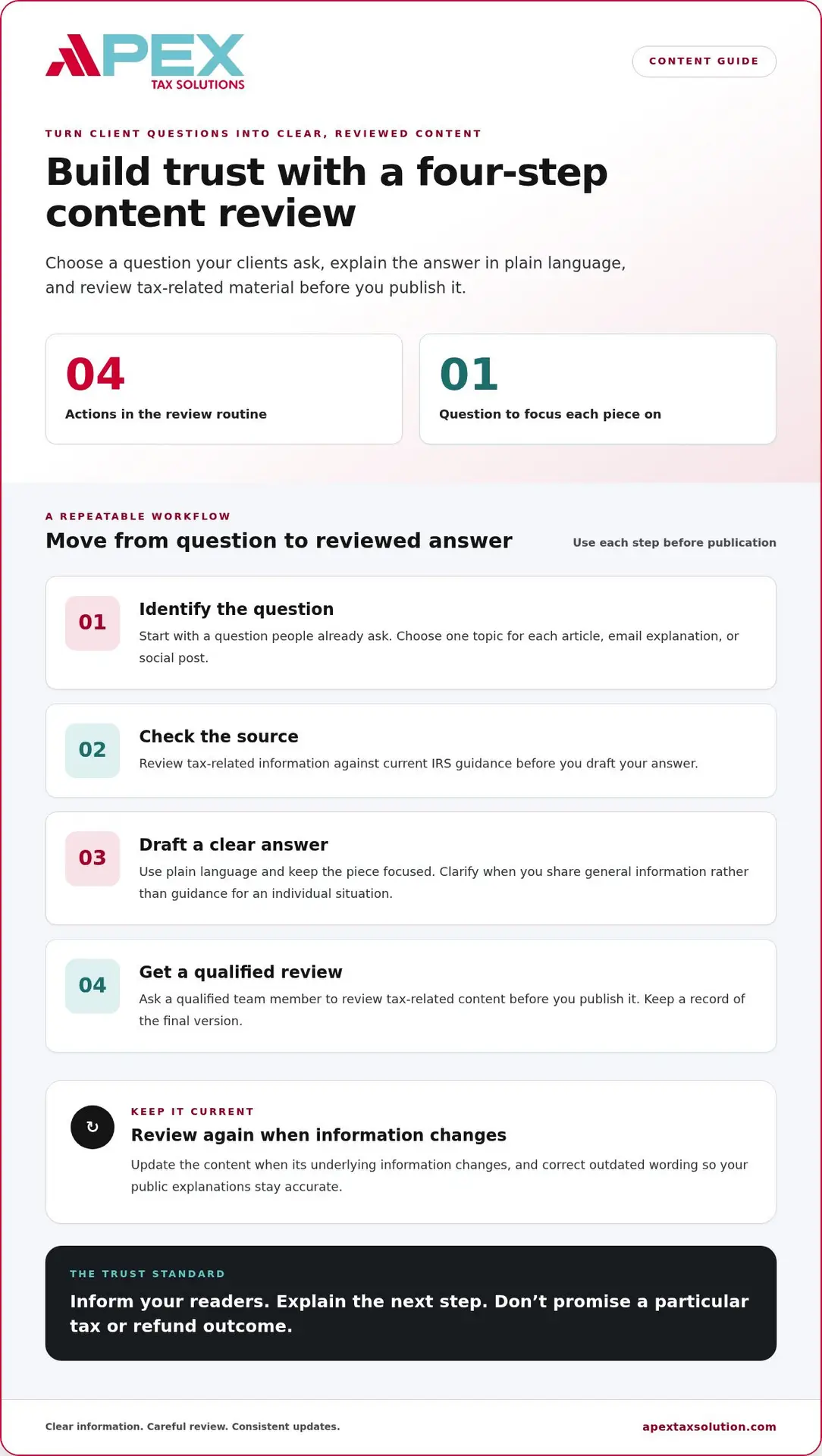
Helpful tax content informs readers and clarifies next steps without guaranteeing a particular tax or refund outcome. Have qualified staff review tax-related material against current IRS guidance before publishing. Review it again when the underlying information changes, and correct outdated wording so your public message stays accurate.
Build a simple review routine: identify the question, check the source, draft a clear answer, and have a qualified team member review it before publication. Keep a record of the final version and update it when needed. This repeatable process helps you share useful information without relying on unsupported claims.
Clear messaging also strengthens broader marketing strategies for tax professionals by making each channel feel connected. Align your service descriptions, inquiry replies, and appointment instructions so prospects receive a consistent explanation from first contact through a conversation with your team.
Compare Marketing Strategies for Tax Professionals by Role and Effort
Once you know what you want your marketing to accomplish, compare channels by the work they do and the follow-up they require. Referrals and accurate online information can help new prospects find you. Email and social media help you stay connected with people who already know your practice. Educational content can support both by answering questions before or after someone reaches out.
You don’t need to manage every channel. A smaller practice can start with a manageable mix: maintain accurate business information, make it easy for satisfied clients to refer others, and add one communication channel you can keep active. The right mix is the one you can maintain consistently and follow through on.
| Channel | Primary role | Effort and follow-up |
|---|---|---|
| Referrals | Discovery through existing relationships | Make it easy for clients and professional contacts to describe your services. Follow up promptly when someone reaches out. |
| Search visibility | Discovery when prospects look for tax help | Keep your business details and service descriptions accurate and current. Review them when your services or contact information change. |
| Educational content | Discovery and relationship building | Answer a recurring client question in a short article or post. Check tax details for accuracy and update information when needed. |
| Relationship and retention | Send timely, relevant messages to an audience that has agreed to receive them. Plan a useful next step, such as sharing an update or inviting a response. | |
| Social media | Discovery and ongoing familiarity | Share practical education and practice updates at a pace you can sustain. Respond to appropriate questions and direct people to a clear next step. |
Which channels help prospective clients discover your practice?
Referrals build on trust that an existing client or professional contact has already established. Make the introduction easier by giving people a simple, accurate way to describe who you serve and what you do. Search visibility also depends on clear, consistent business information, although accurate details don’t guarantee a particular ranking. Educational content can reach prospects earlier in their decision process by addressing common questions in language they understand.
Which channels help you follow up and retain clients?
Email gives you a direct way to share relevant updates with people who have agreed to receive your messages. Social media offers a public format for regular education and practice news, but it works best when posts reflect your actual services and you can maintain a reasonable pace. Keep follow-up useful and clear. Don’t treat a client-service message as permission for unrelated promotions, and avoid claims that could mislead people about tax outcomes.
Review your capacity before adding another channel. If you can manage only one new activity, choose the one that supports your objective and has a clear owner and follow-up step. That keeps your marketing strategies for tax professionals practical instead of turning a channel list into another demand on your team.
Create a Repeatable Marketing Plan for Your Tax Practice
A written plan helps you stay consistent without adding unnecessary work to an already busy practice. Keep it simple: decide what you want to achieve, choose activities you can maintain, and set a regular time to review what happened. These steps turn marketing strategies for tax professionals into a practical routine instead of a collection of disconnected tasks.
- Set one goal. Choose a clear outcome, such as more relevant inquiries, more completed consultations, or stronger returning-client activity.
- Choose channels. Select the channels that fit your audience, available time, and goal. Start with a manageable mix rather than trying to maintain every platform.
- Plan messages. Match each message to its purpose. A prospect-facing update may explain your services, while a client communication may share useful information or a clear next step.
- Assign tasks. Name who drafts, reviews, publishes, and responds. One person may handle several tasks in a small practice, but each responsibility should still be clear.
- Review results. Compare activity with your starting point and stated goal. Record what worked, what stalled, and what you’ll adjust next.
How should you organize marketing work around tax-season demand?
Plan around your practice’s actual busy periods and team capacity, not an assumed universal calendar. Prepare common educational topics, client updates, and draft messages in advance, then schedule them when they’re useful and your team can respond. Leave room to update information as circumstances change.
Make ownership clear before work begins. Decide who writes each message, who reviews it for accuracy, who publishes it, and who handles replies. Repeatable communication processes help keep outreach organized. A workflow automation guide can complement this planning, but each message still needs appropriate review and follow-up.
Separate campaign work from ongoing client communication. A seasonal campaign may focus on a specific service or timely reminder, while year-round communication can maintain helpful contact between busy periods. Set a pace your team can deliver reliably.
What should you measure and improve?
Use a small set of indicators tied to your goal. If you want more qualified inquiries, record which inquiries match your services and how many complete a next step, such as booking a consultation. If you want to support retention, track returning-client activity using a consistent definition, such as a returning client who starts the process for a new service period.
Define each measure before you begin and keep the same time period and counting method when you review it. Consistent tracking makes comparisons more useful and helps you avoid mistaking attention, such as views or likes, for progress toward a practice outcome.
Judge each channel by how well it supports your stated objective, not by activity alone. Review which channels bring relevant inquiries and which help maintain client relationships. Change one element at a time, such as the message or follow-up step, and note what you learn before making another adjustment.
GHL for Tax Offices can support marketing follow-up and communications as part of a repeatable office process.
How APEX Tax Solutions Supports a More Connected Marketing Strategy
A thoughtful marketing plan needs reliable business processes behind it. You may attract a prospect through a referral or online search, but clear communication and timely follow-up help carry that first interaction forward. Apex Tax Solutions LLC brings tax software, professional training, and service bureau support together to support the operational side of your practice while you put your client-acquisition plan into action.
For offices looking to organize marketing communications, GHL for Tax Offices provides an implementation designed to support marketing automation and client acquisition. It can fit into a broader approach to managing outreach and follow-up. Automation supports the process, while your team shapes messages around your services, audience, and client relationships.
How can connected tools and support help your practice?
Consider where your process needs more structure. You might want a clearer way to manage inquiries, organize follow-up, or keep office communications consistent. GHL for Tax Offices is designed to support those marketing and client-acquisition needs. For more detail on how this type of implementation relates to your work, explore the guide about GHL for tax preparers.
Training and operational support can complement your marketing by helping you build confidence in the systems your practice uses. Apex Tax Solutions LLC provides tax software, professional training, and service bureau resources. Its Service Bureau Partner Program includes dedicated support and year-round mentorship, creating a continuing partnership alongside the tools and learning that support your business.
Apex Tax Solutions LLC is Latino-owned and has operated since 2015. The team offers support in English and Spanish, which can help you serve clients who prefer to communicate in either language. Clear communication across your office processes connects the experience you describe in your marketing with the service clients receive.
What is a practical next step for your tax business?
Start by identifying your main growth need. You may want to strengthen client follow-up, build your team’s software skills, or explore a service bureau partnership. Naming the priority first helps you focus on support that aligns with your practice, rather than adding tools or processes without a clear purpose.
If you’re considering a partner model, use a service bureau guide for tax professionals to understand how that kind of support could fit your business. Then compare your needs with the software, training, and partnership resources available to you. Apex Tax Solutions LLC supports your work with connected resources while you maintain the relationships and make the decisions that shape your practice.
Review the resources available for your practice and growth priorities: Apex Tax Solutions LLC.
Turn Your Growth Plan into a Steady Practice
Your next step doesn’t need to be a major campaign. Choose one action that supports your current business goal, assign it to someone, and decide how you’ll know whether it helped. A manageable start gives you room to learn while keeping your attention on the work your clients depend on.
Let what you learn shape your next move. The most useful marketing strategies for tax professionals aren’t fixed formulas; they’re thoughtful practices you can adapt as your audience, capacity, and priorities evolve. Keep your communication clear, your measures meaningful, and your follow-up aligned with the experience you want clients to have.
As you put your plan into action, the right partner can help connect the tools and support behind your practice. Partner with APEX Tax Solutions today to explore support for your tax business.
Frequently Asked Questions
How can tax professionals attract more clients without relying only on referrals?
Give prospective clients more than one way to discover your practice. Keep your online business profile accurate, describe your services clearly on your website, and share useful answers to common tax questions. You can also build relationships with professional groups whose members may encounter people who need your services. Make each source easy to identify by asking new inquiries how they heard about you.
What marketing strategies work best for a small tax preparation business?
The most practical options are the ones you can maintain while serving clients. For example, a solo preparer might keep a business profile current, publish a helpful article when a common question arises, and send a brief client update when there’s something relevant to share. Start with a clear audience and service focus, then add another activity only when you have time to manage it consistently.
How can a tax preparer market services year-round?
Stay visible between filing seasons by sharing timely information, responding to client questions, and keeping your business details current. You might explain what to organize before an appointment, clarify a common tax term, or share an office update. Keep each message relevant to your services and the time of year. A steady, useful presence can help clients remember your practice when they or someone they know need tax preparation.
Is social media effective for marketing a tax preparation business?
Social media can help people become familiar with your practice, especially when you post useful information in a consistent voice. Share an explanation of a common tax term, introduce your team, or clarify what clients can expect when they contact your office. Give readers a clear next step, such as directing them to your service information. Review whether posts lead to relevant inquiries, not just reactions or follows.
Can educational content help tax professionals attract new clients?
Yes. A useful article or short post can answer a question a prospective client has before choosing a preparer. Consider topics such as what information to gather before an appointment or how to understand a general tax document. Keep the explanation focused, check tax details against current IRS guidance, and distinguish general education from advice tailored to an individual’s situation. Helpful content builds familiarity without promising a specific result.
How should tax professionals measure marketing results?
Choose measures that show whether an activity supports a real business goal. If you want more consultations, record where inquiries came from and whether they booked. If you’re working to encourage repeat business, track returning-client activity using the same definition each time. A simple spreadsheet can capture the date, source, inquiry type, and next step, giving you useful information without requiring complex reporting tools.
What should a tax preparer include in a marketing plan?
Include the client group you want to reach, the services you want to promote, one primary objective, the channels you’ll use, and the person responsible for each task. Add a short message outline and a way to record inquiries and next steps. For example, note who drafts an email update, who reviews it, and when you’ll assess whether it prompted relevant responses. Keep the plan manageable enough to use.